
Gas Lyfter: mixing with gas instead of motors
Mixing is one of the biggest power users on a biogas plant, and submerged agitators are a common cause of breakdowns. The Gas Lyfter moves the tank content with large gas bubbles in a vertical column. Nothing rotates inside the tank.
At a glance
| Inside the tank | no motors, shafts or propellers |
| Drive | one compressor outside the tank |
| Clogging | none: large open column |
| Retrofit | possible in existing digesters and tanks |
Large bubbles lift the liquid
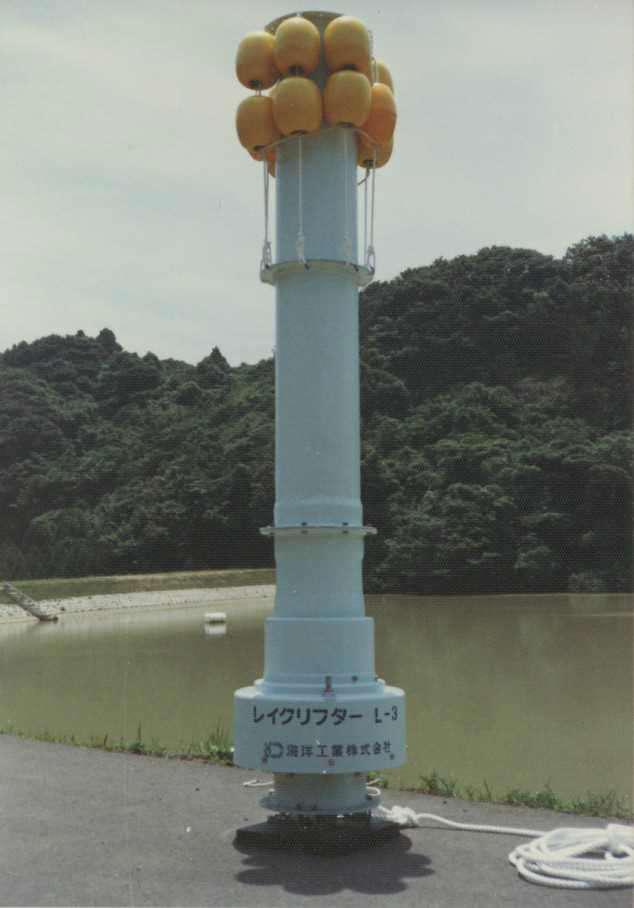
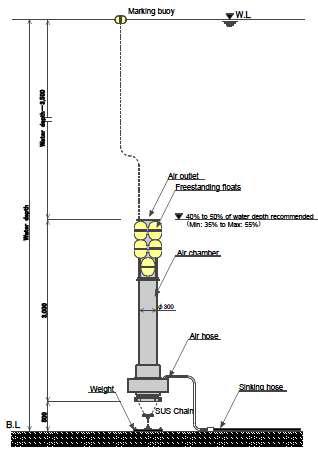
Gas flows through a hose into an air chamber at the foot of a vertical column. When the chamber is full, the gas leaves as one large bubble. It rises through the column like a piston and pulls the liquid up with it; new liquid flows in from below, and the tank turns over.
Floats hold the column upright, a weight anchors it. The only connection to the outside is the gas hose.
Design data and the manufacturer are being confirmed. We will add them here.
Why gas mixing pays off
- Very low mixing power: one compressor instead of several agitators
- No clogging: no propeller for fibres, plastic or straw to wrap around
- Complete mixing: the whole tank circulates, fewer dead zones and floating layers
- Low running cost: no gearboxes or seals in the tank, very little maintenance
Where it is used
- Anaerobic digesters for biogas and BioCNG
- Pre-storage and hydrolysis tanks
- Wastewater and sludge tanks
- Plants where agitators keep failing
Mixing problems in your digester?
Send us tank size, substrate and how you mix today. We propose a Gas Lyfter layout.
Helpful for a first assessment
- Type and size of the plant: biogas, BioCNG or wastewater; m³, t/day or kW
- Substrates: type, quantity per day, dry matter if known
- What bothers you today: gas yield, H₂S, mixing, sludge volume
- A few photos of the site, if you have them