
High-power ultrasound for sludge and biogas
The BIOSONATOR is a plug-and-play ultrasound unit from ULTRAWAVES, a 2001 spin-off of Hamburg University of Technology. It makes organic matter easier to digest, in municipal sewage sludge as well as in agricultural, industrial and food-waste biogas plants.
At a glance
| Frequency | 20 kHz, oscillators directly in the sludge |
| Treatment time | 1–2 minutes per pass, partial stream only |
| Connected load | about 5 kW |
| Installation | container unit, set up in under a day |
| References | 250+ worldwide, incl. Ongole, India |
The bottleneck is hydrolysis. Cavitation opens it up.
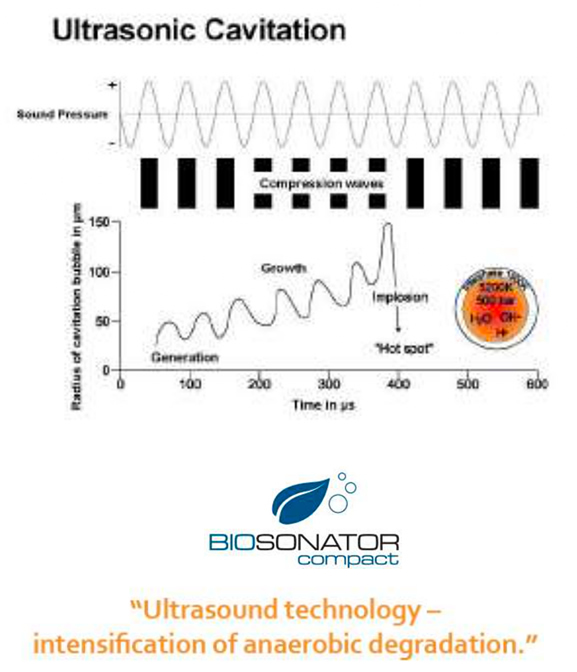
Ultrasound at 20 kHz creates tiny bubbles that collapse with local pressures of around 500 bar. The shear forces crack cell walls and flocs, release enzymes and give the bacteria more surface to work on. Because the oscillators sit in the medium itself, the cavitation is “hard”; ULTRAWAVES puts it at about ten times as effective as indirect sonication.
Macerator
Takes a partial stream, usually 30–50 % of the daily feed from the secondary digester, and cuts coarse fibres.
Pump
Eccentric screw pump with frequency converter sets the flow.
Ultrasound reactor
3–10 oscillators in the medium, amplitude controlled automatically.
Return
Treated material flows back to the digester; the unit is monitored remotely around the clock.
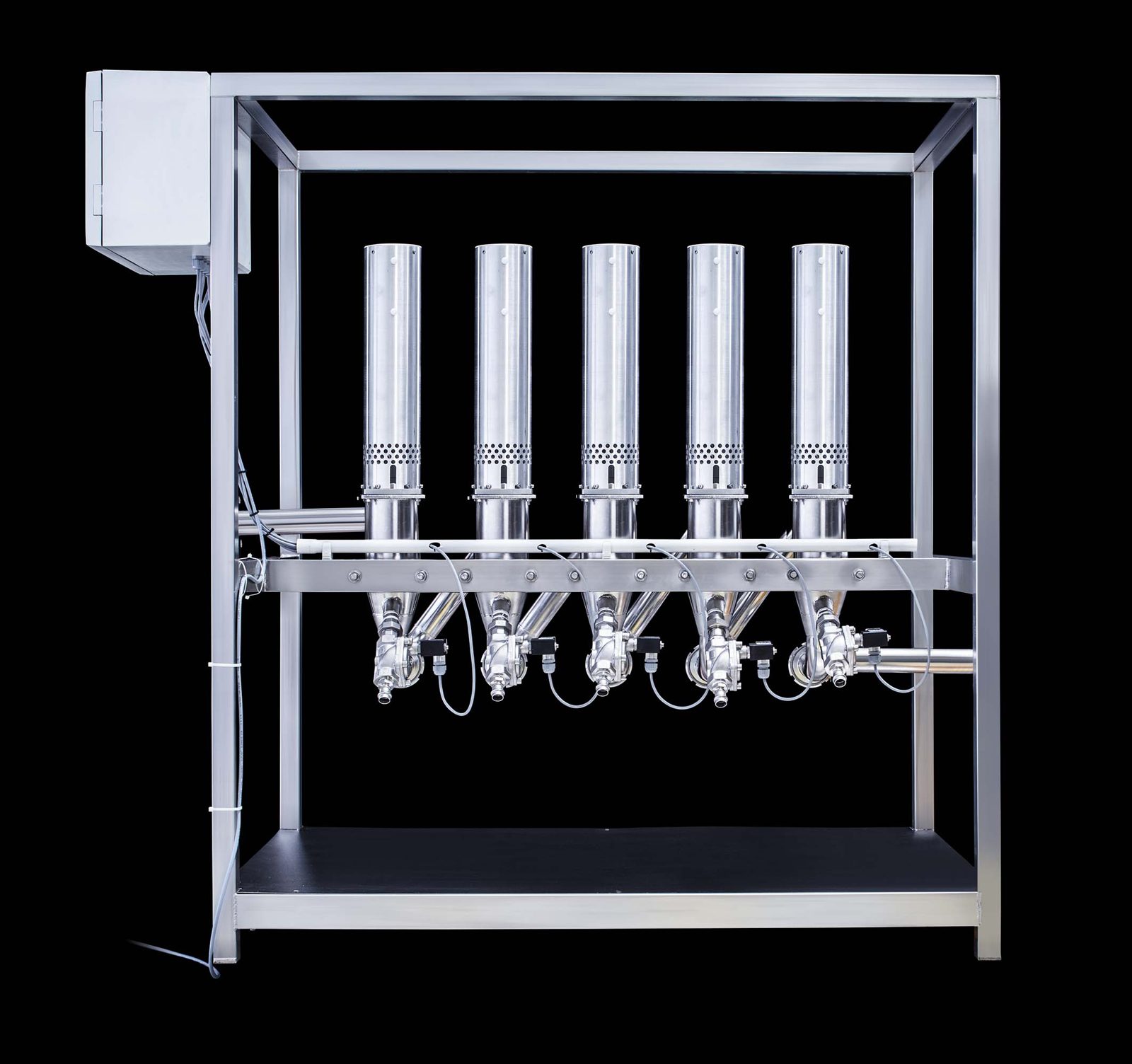
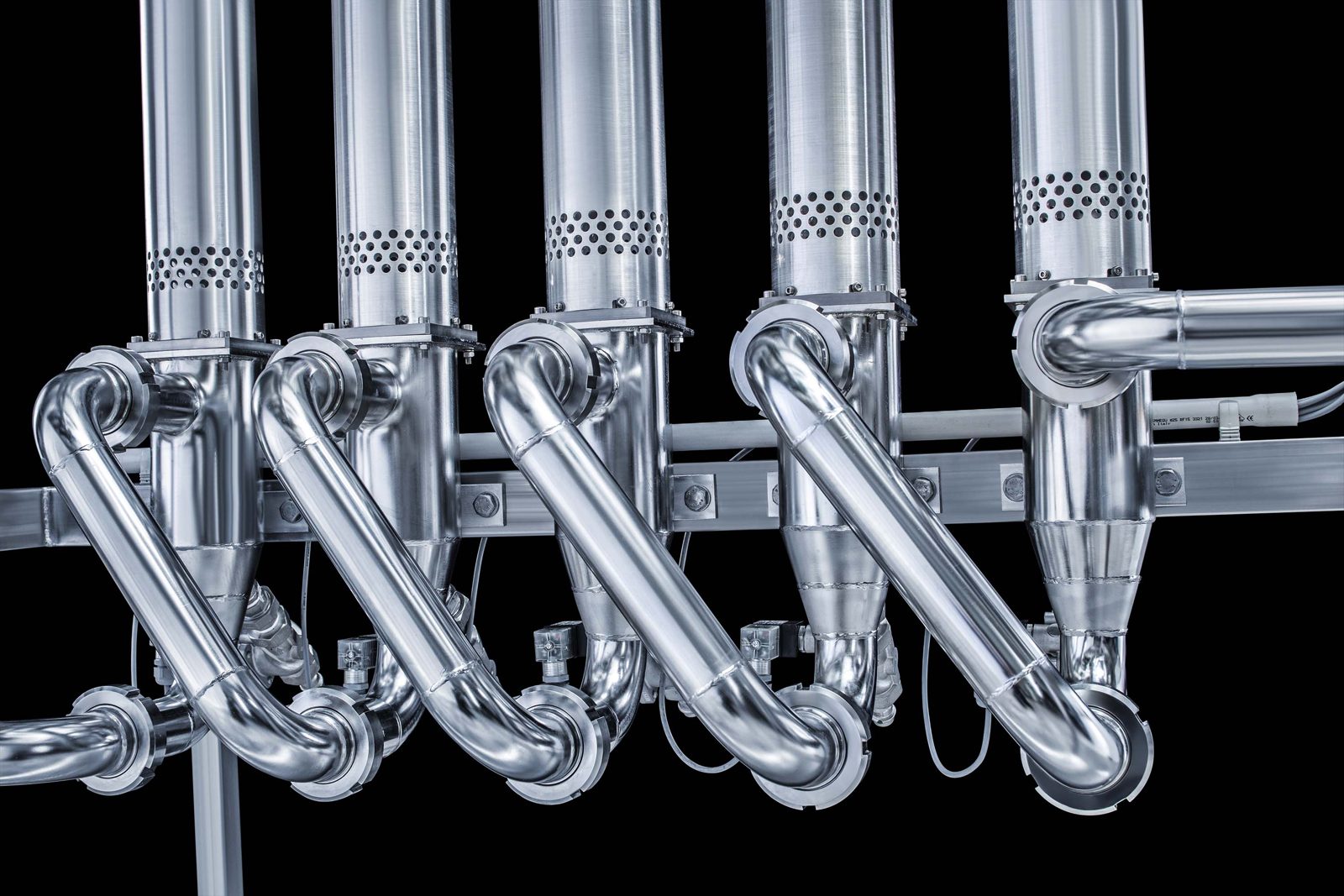
Sewage treatment plants
For plants with anaerobic digesters and for aerobic sludge stabilisation. Most useful where the digesters run at their limit or sludge disposal is expensive.
- Sludge disintegration
- Control of bulking sludge and foam
- Internal carbon source for denitrification
- Less polymer for dewatering
Manufacturer figures, ULTRAWAVES GmbH.
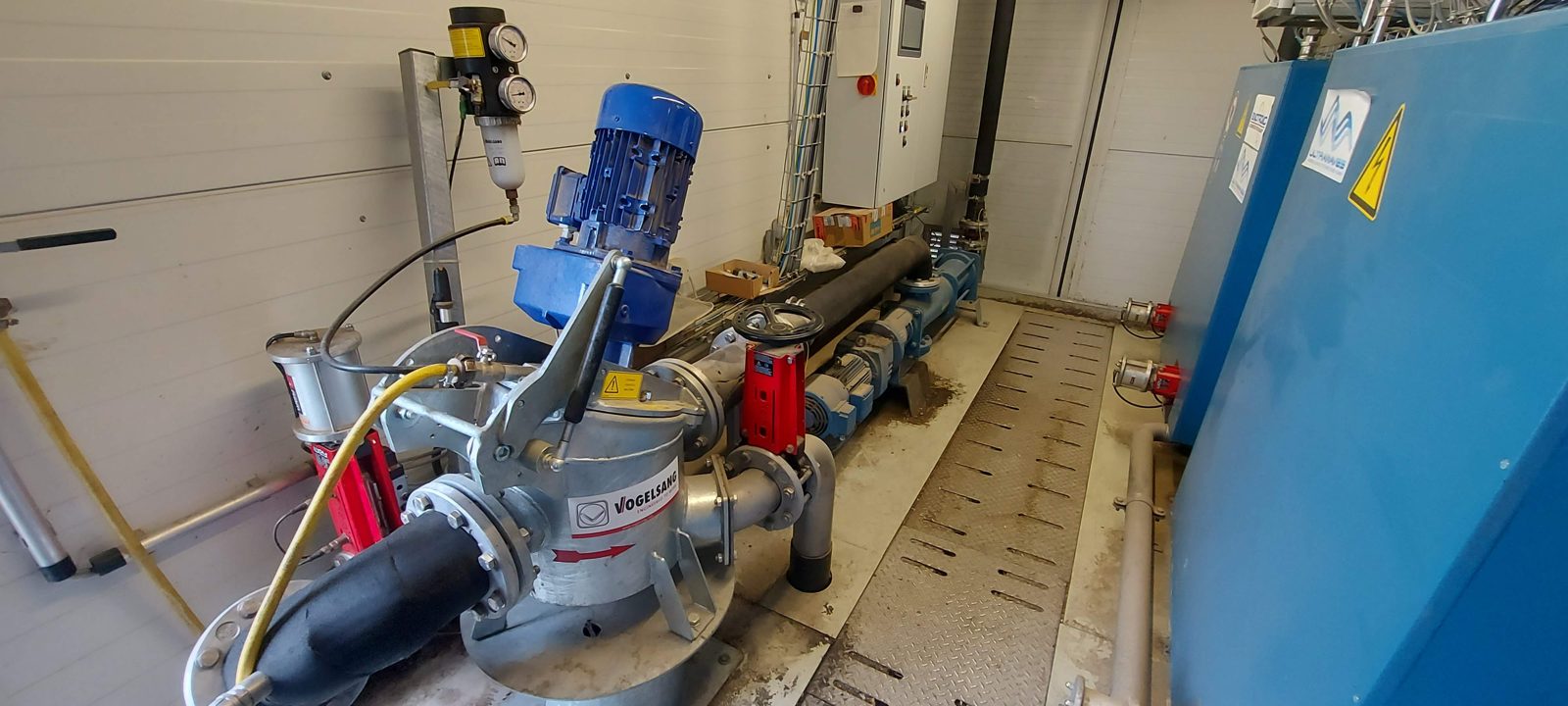
Biogas plants
For plants from about 300 kW electrical, or the same capacity as BioCNG, mesophilic or thermophilic, with up to 15 % dry matter.
- Works on fibrous feed: grass, manure, straw
- Thinner digestate, less stirring power
- Fewer floating layers
Manufacturer figures, ULTRAWAVES GmbH; payback depends on the site.
References: what operators measured
ULTRAWAVES has more than 250 installations worldwide. Below are the plants with published before-and-after figures. All case studies and operator data are on our downloads page.
Sewage treatment plants in Germany
| Plant | Size | Since | Biogas (Nm³/kg VSS fed) | Biogas gain | VS degradation |
|---|---|---|---|---|---|
| Bamberg WWTP | 320,000 PE | 2002 | 0.35 → 0.45 | +29 % | 35 → 45 % |
| Leinetal WWTP | 60,000 PE | 2002 | 0.45 → 0.54 | +20 % | 41 → 52 % |
| Meldorf WWTP | 65,000 PE | 2004 | 0.51 → 0.65 | +25 % | 48 → 61 % |
| Bünde WWTP | 60,000 PE | 2006 | 0.45 → 0.55 | +22 % | 49 → 60 % |
| Ahrensburg WWTP | 55,000 PE | 2009 | 0.40 → 0.48 | +20 % | 42 → 51 % |
| Heide WWTP | 40,000 PE | 2016 | 0.51 → 0.61 | +20 % | 51 → 62 % |
| Rudolstadt WWTP | 80,000 PE | 2018 | 0.50 → 0.63 | +26 % | 50 → 63 % |
PE = population equivalent; VS = volatile solids. Before and after the ULTRAWAVES installation, all mesophilic digestion. Rudolstadt also reports no more foaming, because the ultrasound breaks up filamentous bacteria. Source: ULTRAWAVES reference compilation with operator data.
Bamberg (320,000 PE) has run ultrasound since 2002 and is energy self-sufficient without co-digestion. Bamberg summary (PDF) · Energy balance 2004–2023 (PDF)
Biogas plants: case studies
| Plant (Germany) | Type and size | Since | Measured result | Case study |
|---|---|---|---|---|
| Ense | Farm biogas, 3,556 kW | Dec 2015 | Specific power production +10 %, methane +2 %; payback about 3 years. The operator added two more systems. | |
| Haren | Farm biogas, 590 kW | Jul 2015 | Substrate input −8 %, substrate costs about −10 % (EUR 40,000 a year) | |
| Loburg | Farm biogas, 560 kW | Oct 2012 | Substrate input −7.4 %, substrate costs about −17 % (EUR 51,800 a year), biogas +6 % | |
| Bordesholmerland | Farm biogas, 2 × 537 kW | May 2011 | Substrate input −9 % (2.2 t less maize per day), methane content +3 % to 53 %; second system added in 2012 | |
| Mariks | Food waste, 700 kW el. | 2011 (trial) | Electrical output from 696 kW to 786 kW (+13 %) | |
| Lindow | Farm biogas, 500 kW | Mar 2008 | Biogas production +12.6 to 14.4 % (two figures in the case study); payback after 3–4 years |
Each BIOSONATOR treats a partial flow from the secondary digester and returns it to the main digester. Results as reported in the ULTRAWAVES case studies.
Further installations worldwide
| Plant | Country | Type | Size | Since |
|---|---|---|---|---|
| Pearl Distillery, Ongole | India | Distillery | – | 2012 |
| Yanzhou WWTP | China | Wastewater | 750,000 PE | 2016 |
| Shek Wu Hui WWTP | Hong Kong | Wastewater | 350,000 PE | 2014 |
| Arrudas WWTP | Brazil | Wastewater | 2,000,000 PE | 2010 |
| Dąbrowa Górnicza WWTP | Poland | Wastewater | 200,000 PE | 2008 |
| Trier WWTP | Germany | Wastewater | 170,000 PE | 2015 |
| Bispingen | Germany | Biogas | 1,100 kW | 2008 |
Source: ULTRAWAVES reference lists. Sludge disintegration is described in the German guideline DWA-M 302.
Video: ultrasound at the Ense biogas plant
A farm biogas plant in Germany that has run a BIOSONATOR since December 2015 (results in the table above). The video is on YouTube; this page loads nothing from YouTube.
Test ultrasound on your sludge
Send us your plant data. We look at the potential together with ULTRAWAVES and tell you honestly whether a trial makes sense.
Helpful for a first assessment
- Type and size of the plant: biogas, BioCNG or wastewater; m³, t/day or kW
- Substrates: type, quantity per day, dry matter if known
- What bothers you today: gas yield, H₂S, mixing, sludge volume
- A few photos of the site, if you have them